
This article was originally published by Westminster World and is republished here with permission. Click the link below to read the interactive article.
 Nina Yaminah Daneshvar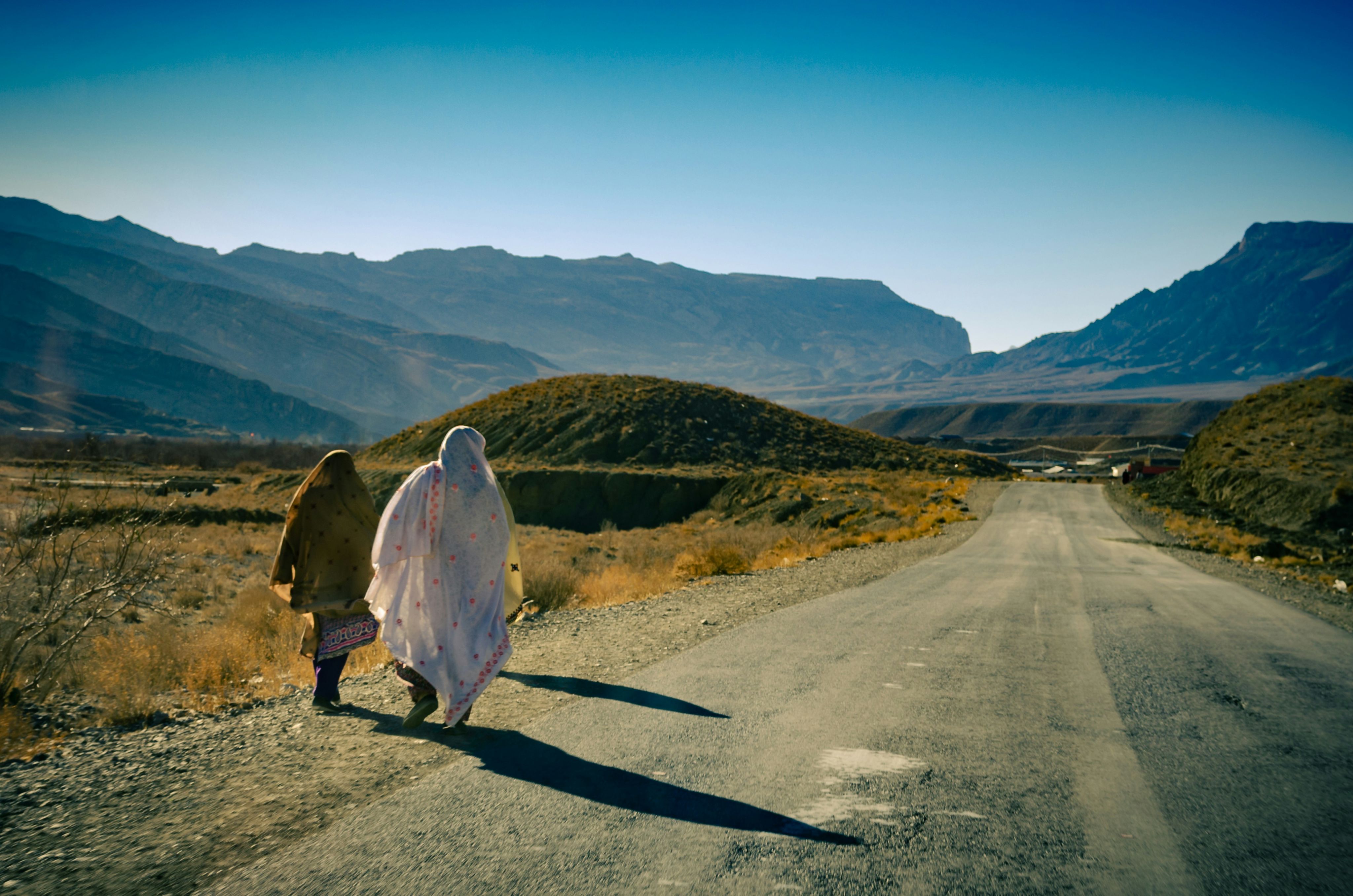
The year is 2009.
After visiting his family in Balochistan, a province in southwestern Pakistan that has long been the center of political unrest, Ehsan Arjemandi, a Norwegian of Baloch descent, boards a bus to the airport. Ready to head back to Norway.
What should have been a routine journey takes a sudden and terrifying turn.
Without warning, the vehicle comes to a halt. Armed men, both uniformed and plainclothed board the bus, pointing out Ehsan.
He is yanked from his seat, his hands bound with tight handcuffs. A bag is thrown over his head.
His world slips away as he is dragged into a car, destined for an uncertain fate.
His marks the beginning of 12 years in captivity - an unimaginable ordeal that would see him subjected to torture, isolation, and medical neglect.
Disappeared, Without a Trace
For years, his family had no idea whether he was alive or dead. Arjemandi recalls his unlawful imprisonment vividly: “I was detained without any charge, and for years, I was subjected to torture”.
He had no access to legal representation or contact with the outside world. During his detention, Arjemandi was denied medical care for his diabetes and high blood pressure, worsening his condition.
He reflects on the complete lack of due process during his abduction:
“I was abducted by ISI (Inter-Services Intelligence). They don’t operate according to legal norms. This isn’t a Western country where you are informed of your rights. I was just dragged from my seat, blindfolded, and handcuffed. From there, I was taken to a detention center, where I was isolated.”
8 of those years were spent in total isolation.
The conditions he endured were brutal beyond imagination. Former prisoners, who have been fortunate enough to be released, describe the torture methods used in these detention centers as unbearable.
Methods include waterboarding, hanged upside down, beaten with leather batons, and even being forced to endure gasoline and chili pepper inserted into the rectum – just a few of the horrific tactics used to break those detained. These accounts are common among those who have survived and returned to share their stories.
Despite the psychological strain of isolation, Arjemandi found the strength to resist:
“What helped me was that I refused to be broken by those who had abducted me. I knew I wouldn't give them the satisfaction of breaking me.”
Arjemandi’s release was a rare exception in a system that routinely leaves Baloch prisoners to suffer in detention or be subjected to “kill & dump” tactics.
After 12 years and 25 days in captivity, he was finally released in 2021.
However, his release didn’t come without its conditions. Arjemandi was forced to sign a statement promising never to speak about his experiences.
“I had to sign a document agreeing that I would never talk about my time in detention,” yet, despite the threats and the intimidation, he continues to speak out. Arjemandi asserts:
“If I let fear take over, I wouldn’t achieve anything. I will continue to share my story because the world needs to know what’s happening in Balochistan.”
He was one of the lucky ones – many others are not so fortunate. Thousands of Baloch individuals, including men, women, and children, continue to face enforced disappearances, torture, and even execution at the hands of the Pakistani military and intelligence agencies.

Ehsan Arjemandi’s story is not unique; it’s part of a larger and continuing crisis in Balochistan, where the people’s fight for self-determination is met with brutal repression.
A land of riches, but a people silenced
Balochistan, a vast region spanning parts of Pakistan, Iran, and Afghanistan, is home to the Baloch people, whose deep connection to their land contrasts sharply with the oppression they endure.
Rich in natural resources like gas, oil, and minerals, Balochistan is one of the world’s most exploited regions.
Yet, despite this wealth, the Baloch remain one of the most marginalized communities globally. Their culture, language, and way of life overshadowed by military repression and political exclusion that has spanned decades.
The conflict in Balochistan goes beyond political dissatisfaction; it’s a struggle for survival. Since the partition of British India in 1947, Balochistan has been caught between the interests of larger powers.
Despite its vast resources, the Baloch see little benefit.
Instead, their demands for autonomy have led to brutal military action from the Pakistani state, marked by enforced disappearances and systemic violence.
Sameer Mazar, a Baloch National Movement activist, paints a grim picture:
“Enforced disappearances aren’t just crimes against individuals; they’re attacks on entire families. When someone is taken, their loved ones lose peace, sleep, even hope. For us, Baloch living abroad, we check our phones every day, praying our families are safe.”
For decades, the Pakistani military has maintained control through violence, fear, and impunity. As Jaffer Mirza, a PhD candidate at King’s College London, puts it:
“The scale of violence in Balochistan is unique in Pakistan. The military operates here without fear of consequences. No one talks about it the way they do in other regions like Punjab or Karachi.”
The discovery of mass graves in 2014 and 2015 revealed the extent of the violence, but the world’s response was muted.
The identities of the buried remain unknown, and the Pakistani military continues its actions unchecked by the international community.
Enforced disappearances, however, serve as more than just a repressive tool; they’re a demonstration of power. As Mirza explains, “enforced disappearances show the state’s control over Baloch bodies. It instills fear, showing that anyone can be taken, at any time, without recourse.”
“Earlier, the state targeted students, teachers, and journalists, but now, no one is safe. The crackdown is expanding. Laborers, farmers, businesspeople – all live under the constant threat of abduction or death.”
The impact of these disappearances extends to all Baloch.
In resources like gas, minerals, and oil, Balochistan's wealth is exploited for military gain. Yet, the local population sees none of it. Mirza clarifies: “The state wants control over Balochistan’s resources - gas, minerals, gold - but doesn’t want the Baloch to have any say in how these resources are used. The military seeks to maintain its hold over the land.”
For Mazar, the struggle is about more than politics—it’s about reclaiming dignity. “The violence isn’t just about politics; it’s about a nation reclaiming its pride and identity. The Baloch have suffered too long, and this fight is about restoring what’s been taken.”
Despite the brutality, the international community has remained largely silent. Mirza points to the geopolitical interests that have allowed these violations to continue.
“The international community has failed the Baloch. There’s too much interest in maintaining good relations with Pakistan, and that’s why there’s been no sustained pressure to stop these violations.”
Mazar agrees, emphasizing the global inaction:
“The world has turned a blind eye to Balochistan. They see it as Pakistan’s internal issue, but that silence lets the military continue exploiting the land and people.”
Despite years of repression, resistance is rising. Central to this movement is Dr. Mahrang Baloch, a prominent leader with the Baloch Yakjehti Committee (BYC). Her tireless advocacy for Baloch rights has brought global attention to the cause.
In March of this year, just two weeks after being nominated for the Nobel Peace Prize, she was arrested during a peaceful sit-in protest, intensifying international attention on her plight.
Her arrest is just the latest in a long line of state attempts to silence critics. But Dr. Mahrang’s resolve remains unbroken. In a letter from prison, she wrote:
“We are not afraid of violence or imprisonment. Our struggle is about justice, and we will continue, no matter the cost.”
Her words resonate strongly with the younger generation of Baloch activists, especially women, who are reshaping the movement. Activists like Sammi Deen Baloch are connecting the Baloch struggle to global discourses of oppression and colonialism. As Mirza highlights, “The fight is no longer just about political autonomy. It’s about dignity, identity, and challenging patriarchy and exploitation.”
Social media platforms like Facebook and Twitter have given Baloch voices the opportunity to break through state censorship, bringing their message to a wider audience. However, despite the increased visibility, the world’s response remains inadequate.
Arjemandi emphasizes the lack of meaningful international action, saying “the international community must take more responsibility. They need to set aside their national interests. Just as they intervened in Rwanda and Bosnia, they must do the same in Balochistan. Between 19 and 32 mass graves have been discovered, but nothing is mentioned.”
This global indifference allows the Pakistani military to continue its violent campaign unchecked. Yet, Baloch activists remain committed in their fight for freedom.
As Mazar puts it:
“We’re not asking for pity. We want justice. This fight for freedom will not stop.”